Telangana Welfare Updates 2026: Indiramma Family Life Insurance, Ration Card Reforms, and Major ₹5 Lakh Schemes
Introduction
In early 2026, the Telangana government has taken a decisive step toward strengthening its welfare framework, particularly targeting economically weaker sections through expanded social security, food access, and livelihood initiatives. These developments center around ration card holders, who form the backbone of the state’s welfare beneficiary system.
From the introduction of the Indiramma Family Life Insurance Scheme offering ₹5 lakh coverage, to the distribution of new ration cards and stricter verification mechanisms, the government is clearly moving toward a more targeted and accountable welfare model.
This article provides a comprehensive, SEO-optimized overview of all major developments, including eligibility, benefits, implementation strategy, and what these changes mean for beneficiaries across Telangana.
Indiramma Family Life Insurance Scheme: ₹5 Lakh Coverage
Overview of the Scheme
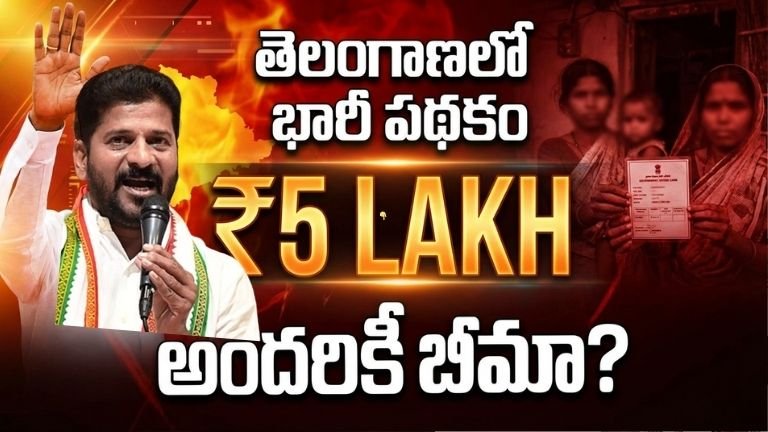
The Telangana government has announced a landmark social security initiative under the name Indiramma Family Life Insurance Scheme, aimed at providing financial protection to families holding ration cards.
The scheme offers a life insurance cover of ₹5 lakh, primarily intended to support families in the event of the death of the primary earning member. This initiative reflects a broader policy shift toward risk protection and income security for vulnerable households.
Launch Timeline
The official launch is expected on June 2, 2026, marking Telangana Formation Day. This symbolic date reinforces the government’s intent to align welfare expansion with state identity and development milestones.
Target Beneficiaries
- Over 1 crore ration card holder families
- Economically weaker sections
- Households dependent on a single income source
- Rural and urban poor
Key Features
- ₹5 lakh insurance coverage per eligible family
- Government-supported or fully subsidized premium
- Direct benefit transfer to nominee’s bank account
- Focus on financial resilience during crises
Importance of the Scheme
This initiative addresses a critical gap in social protection. In many low-income households, the sudden loss of the breadwinner can push the entire family into poverty. By offering a substantial insurance cover, the government is attempting to provide a financial safety net that ensures continuity of basic living standards.
Distribution of New Ration Cards
Background
Ration cards, also known as Food Security Cards, are essential for accessing subsidized food grains and other welfare benefits. Recognizing gaps in coverage, the Telangana government initiated the distribution of new ration cards starting July 14, 2025.
Scale of Distribution
- Over 5.61 lakh new ration cards issued
- Targeting eligible but previously excluded families
- Based on Praja Palana survey data
Benefits Under New Ration Cards
Each eligible individual receives:
- 6 kg of fine rice per month
- Completely free of cost
- Access to other welfare schemes linked to ration cards
Role of Praja Palana Survey
The Praja Palana initiative played a crucial role in identifying genuine beneficiaries. It involved:
- Door-to-door data collection
- Income verification
- Household profiling
This data-driven approach ensures that benefits reach those who truly need them.
Eligibility and Verification Process
Why Verification Was Introduced
With the expansion of welfare schemes, the government also identified the need to eliminate ineligible beneficiaries. This ensures efficient use of public funds and enhances the credibility of welfare programs.
Key Verification Methods
1. Income Tax Data Integration
The government is using Income Tax Return (ITR) data to identify individuals who may not qualify for ration benefits.
2. Field-Level Verification
Officials are conducting physical inspections and household surveys to verify:
- Income levels
- Family composition
- Employment status
3. Digital Cross-Verification
Databases are being linked across departments to detect duplication or fraud.
Impact on Beneficiaries
While the verification drive has raised concerns among some beneficiaries, it ultimately aims to:
- Remove ineligible cardholders
- Ensure benefits reach genuine poor households
- Improve transparency and accountability
Other Major ₹5 Lakh Welfare Schemes in Telangana
Apart from insurance, the Telangana government has introduced multiple schemes centered around the ₹5 lakh financial support model.
Indiramma Indlu Housing Scheme
Overview
The Indiramma Indlu Housing Scheme is designed to provide financial assistance for constructing houses.
Key Benefits
- ₹5 lakh financial assistance
- Support for building homes on own land
- Targeted at homeless and economically weaker sections
Significance
Housing security is a fundamental aspect of social welfare. By providing substantial financial aid, the government aims to reduce homelessness and improve living conditions.
Rajiv Yuva Vikasam Scheme
Overview
The Rajiv Yuva Vikasam Scheme focuses on empowering youth through financial assistance for self-employment.
Key Features
- Targeting approximately 5 lakh youth
- Financial aid for startups and small businesses
- Skill development support
Economic Impact
This scheme addresses unemployment by encouraging entrepreneurship, thereby contributing to economic growth and job creation.
Integrated Welfare Approach
The Telangana government’s strategy reflects an integrated approach to welfare:
- Food security through ration cards
- Financial security through insurance
- Housing support through Indiramma Indlu
- Employment generation through Rajiv Yuva Vikasam
This multi-dimensional framework ensures that beneficiaries receive comprehensive support rather than isolated benefits.
Challenges and Concerns
Despite the positive intent, several challenges remain:
1. Awareness Gap
Many eligible beneficiaries are still unaware of new schemes and updates.
2. Documentation Issues
Lack of proper documents can delay or prevent access to benefits.
3. Verification Anxiety
Some genuine beneficiaries fear losing benefits during verification.
4. Implementation Delays
Large-scale schemes often face administrative delays.
Government’s Response
To address these issues, the government is:
- Conducting awareness campaigns
- Simplifying application processes
- Strengthening grievance redressal systems
- Increasing digital accessibility
Future Outlook
The welfare initiatives introduced in 2026 indicate a strong commitment toward inclusive development. If implemented effectively, these schemes have the potential to:
- Reduce poverty levels
- Improve financial stability of households
- Enhance living standards
- Promote self-reliance
Telangana’s 2026 welfare updates mark a significant step toward building a robust and inclusive social security system. The introduction of the Indiramma Family Life Insurance Scheme, expansion of ration card coverage, and implementation of multiple ₹5 lakh support schemes demonstrate a clear focus on protecting and empowering vulnerable populations.
For beneficiaries, staying informed and ensuring proper documentation will be crucial to accessing these benefits. For policymakers, the challenge lies in maintaining transparency, efficiency, and inclusivity in execution.
These developments, taken together, represent not just policy changes but a broader vision of social and economic security for every eligible household in Telangana