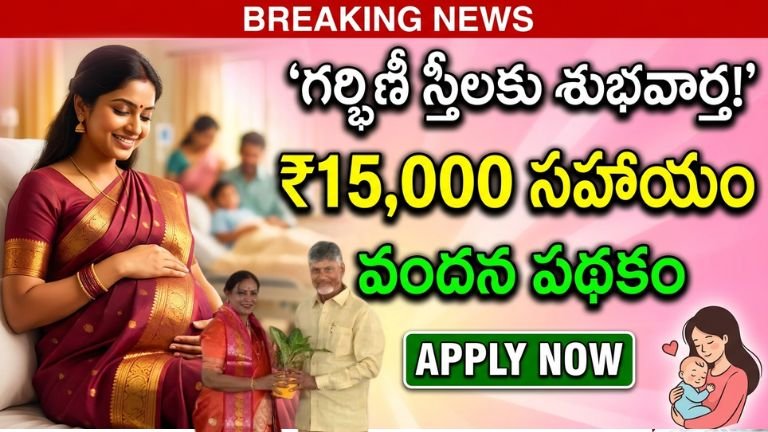
The Ultimate Guide to the Pradhan Mantri Matru Vandana Yojana (PMMVY): Fact-Checking the ₹15,000 Viral Claim, mothers
Welcome, expectant mothers and families! If you are reading this, you have likely come across some fantastic, highly circulated news: “Good news for pregnant women! Apply for the Vandana Scheme with your Aadhaar and Mother card, and ₹15,000 will be credited straight to your bank account!” First off, congratulations on your pregnancy! This is a beautiful and transformative journey, and it is entirely understandable that you are looking for every available resource to ensure a healthy pregnancy and a secure start for your newborn. Government schemes exist precisely to support you during this time.
However, as an AI grounded in fact, I need to be completely honest with you: the claim of a direct, single ₹15,000 payout from the central “Vandana Scheme” is a misconception. Viral social media posts and WhatsApp forwards often mix up different central and state schemes, creating confusion.
But don’t worry! Financial help is absolutely available. In this comprehensive, long-form guide, we are going to break down exactly what the Pradhan Mantri Matru Vandana Yojana (PMMVY) is, how much money you are actually entitled to, how state bonuses might boost your total, and the exact step-by-step process to apply using your Aadhaar card and Mother Card.
Grab a cup of tea, get comfortable, and let’s separate fact from fiction.
What is the Pradhan Mantri Matru Vandana Yojana (PMMVY)?
The Pradhan Mantri Matru Vandana Yojana, often simply called the “Vandana Scheme,” is a flagship maternity benefit program run by the Ministry of Women and Child Development, Government of India.
The Core Objective
The scheme was designed with two primary goals in mind:
-
Wage Loss Compensation: Many working women, especially in the unorganized sector, lose out on wages during the final stages of pregnancy and post-delivery because they cannot work. PMMVY provides cash incentives so women can take adequate rest without plunging their families into financial distress.
-
Health Seeking Behavior: The cash is tied to specific health conditions. To get the money, mothers must register their pregnancy, attend routine check-ups, and ensure their child is immunized. This dramatically improves maternal and infant health outcomes.
Instead of a lump sum of ₹15,000, the central PMMVY scheme operates on a structured installment basis to ensure that mothers are receiving continuous medical care throughout their pregnancy and the baby’s early life.
Fact-Check: Will You Really Get ₹15,000?
Let’s address the elephant in the room. If the scheme doesn’t pay ₹15,000, what does it pay?
Under the central PMMVY guidelines (updated under Mission Shakti 2.0), the financial assistance is structured as follows:
Central Government Payouts (The Reality)
| Beneficiary Type | Total Amount | Installment Breakdown | Conditions to be Met |
| First Living Child | ₹5,000 |
Installment 1: ₹3,000 Installment 2: ₹2,000 |
1st: Pregnancy registration & 1 Antenatal Check-up (ANC). 2nd: Childbirth registration & first cycle of immunizations (BCG, OPV, DPT, Hepatitis B). |
| Second Child (If it’s a Girl) | ₹6,000 | Single Installment: ₹6,000 | Paid after the birth of the second child (only if it is a girl) to promote a positive shift in the sex ratio and discourage female feticide. |
Important Note: If your second child is a boy, the central PMMVY scheme does not currently provide a cash incentive.
So, Where Does the ₹15,000 Number Come From?
The viral ₹15,000 claim usually originates from people combining the central PMMVY funds with State-Specific Maternity Schemes or institutional delivery bonuses.
Depending on which Indian state you live in, the local government might top up the central scheme. Here are a few examples of how amounts can stack up:
-
Janani Suraksha Yojana (JSY): An additional ₹1,000 to ₹1,400 is often provided to mothers who deliver in government hospitals.
-
Telangana (KCR Kit/KCR Nutrition): Telangana offers a massive ₹12,000 (₹13,000 for a girl child) in installments, plus a kit of baby essentials. If people confuse this with the central Vandana scheme, they might estimate around ₹15,000 total.
-
Odisha (Mamata Scheme): Merged with PMMVY, mothers can receive ₹10,000 to ₹12,000.
-
Tamil Nadu (Dr. Muthulakshmi Reddy Scheme): Offers up to ₹18,000 in maternity incentives.
The Verdict: While the central Vandana Scheme gives you ₹5,000 or ₹6,000, depending on your state of residence, you might indeed receive a combined total closer to ₹12,000 or even ₹18,000. However, it is never a flat ₹15,000 payout just for filling out one PMMVY form.
Who is Eligible for the PMMVY Scheme?
The government has targeted this scheme toward women who are most in need of financial and nutritional support. To apply, you must meet certain criteria.
You ARE Eligible If:
-
You are pregnant or a lactating mother having your first child (or second child, if a girl).
-
Your family’s net income is less than ₹8 Lakh per annum.
-
You belong to a Scheduled Caste (SC) or Scheduled Tribe (ST).
-
You are partially (40%) or fully disabled (Divyangjan).
-
You hold an e-Shram card, a MGNREGA Job Card, or a BPL Ration Card.
-
You are a beneficiary under the Pradhan Mantri Jan Aarogya Yojana (PMJAY) or Kisan Samman Nidhi.
-
You are an Anganwadi Worker (AWW), Anganwadi Helper (AWH), or ASHA worker.
You Are NOT Eligible If:
-
You are in regular employment with the Central Government, State Government, or a Public Sector Undertaking (PSU).
-
You are receiving similar maternity benefits under any other law or scheme.
The Golden Trio: Documents You Must Have
The viral message you saw was right about one thing: your documents are the key to unlocking these funds. Because the money is sent via Direct Benefit Transfer (DBT)—meaning it goes straight from the government treasury to your bank—your paperwork must be perfect.
Here are the three critical documents you need:
1. The Aadhaar Card
The Aadhaar Card is the backbone of the application. It ensures that there are no duplicate applications and that the money goes to a real, verified citizen.
-
Crucial Step: Your bank account must be seeded (linked) with your Aadhaar. If your bank account is not Aadhaar-linked, the DBT transfer will fail, and the money will bounce back.
2. The Mother and Child Protection (MCP) Card
Also known as the “Mother Card,” the Thayi Card, or the Mamta Card depending on your region. This is given to you by your local Anganwadi center, Primary Health Center (PHC), or ASHA worker when you first register your pregnancy.
-
It contains your Last Menstrual Period (LMP) date, which the government uses to calculate your eligibility timeline.
-
It tracks your Antenatal Check-ups (ANC) and your baby’s immunizations. Without proof of these check-ups stamped in the MCP card, the installments will not be released.
3. An Active Bank Account
You must have a single (not joint) bank account or a Post Office account in your own name. The name on your bank passbook must exactly match the name on your Aadhaar card.
Other Supporting Documents (Depending on Eligibility):
-
Proof of eligibility (e.g., e-Shram card, BPL ration card, Income certificate showing less than ₹8 LPA).
-
A copy of the child’s birth certificate (required for the second installment).
Step-by-Step Application Process
Applying for the Vandana Scheme has become much easier over the years. You can choose to do it offline through a trusted healthcare worker or online from the comfort of your home.
Option A: The Offline Method (Recommended)
This is the safest method because healthcare workers are trained to fill out these specific forms without errors.
-
Visit your Local Center: Go to your nearest Anganwadi Centre (AWC) or approved Government Health Facility.
-
Register the Pregnancy: Within 150 days of your LMP, register your pregnancy to get your MCP (Mother) Card.
-
Fill Form 1-A: Ask the Anganwadi Worker or ASHA worker for the PMMVY registration form. Fill it out and attach photocopies of your Aadhaar Card, Bank Passbook, MCP card, and eligibility proof.
-
Get the First Installment: Once processed, the first ₹3,000 will be credited to your bank account.
-
Claim the Second Installment: After the baby is born and has received their first round of vaccines (at around 14 weeks), fill out the next form, attach the baby’s birth certificate and updated MCP card, and submit it to claim the remaining ₹2,000.
Option B: The Online Method (PMMVY Portal/App)
If you are tech-savvy, you can apply directly through the government’s citizen portal.
-
Visit the Portal: Go to the official PMMVY website or download the PMMVY Soft app.
-
Citizen Login: Click on the ‘Citizen Login’ tab.
-
Verify Mobile Number: Enter your mobile number and verify it using the OTP sent to your phone.
-
Create an Account: Enter your full name, state, district, block, and village to set up your profile.
-
Fill the Digital Form: Carefully enter your details, including your Aadhaar details, LMP date from the MCP card, and your bank account information.
-
Upload Documents: Upload clear, readable photos or PDFs of your eligibility documents, Aadhaar card, and Mother Card.
-
Submit and Track: Submit the application. You can use the portal later to track the status of your installments.
How the Money is Disbursed (The Math Explained)
Understanding the payment timeline prevents anxiety. You won’t get all the money the day you apply. It is designed to reward healthy behavior throughout the pregnancy timeline.
Scenario A: Your First Child
-
Day 1 to Month 6: You discover you are pregnant. You visit the Anganwadi, get your Mother Card, and have your first health check-up. You apply for PMMVY.
-
Payout 1: ₹3,000 is credited to your Aadhaar-seeded bank account.
-
Month 9: You deliver the baby.
-
Month 12 to 14 (Approx): The baby gets their 14-week immunizations (BCG, OPV, Pentavalent). You submit the birth certificate and updated Mother Card.
-
Payout 2: ₹2,000 is credited to your account.
-
Total: ₹5,000.
Scenario B: Your Second Child (And it’s a Girl)
-
Pregnancy to Birth: You follow the same health protocols, but there is no installment during the pregnancy for a second child.
-
Post-Birth: The baby girl is born and receives her primary immunizations. You submit the application with her birth certificate and your Aadhaar/MCP details.
-
Payout: A single lump sum of ₹6,000 is credited to your account.
-
Total: ₹6,000.
(Remember, if your second child is a boy, no central PMMVY funds are disbursed, though state schemes might still apply).
Common Pitfalls and Why Applications Get Rejected
Many mothers apply but never see the money in their bank account. Avoid these common mistakes:
-
Bank Account Not Aadhaar Seeded: This is the #1 reason for failure. Even if you gave your bank your Aadhaar card when you opened the account, it doesn’t mean it is mapped for Direct Benefit Transfers (DBT) on the NPCI server. You must explicitly ask your bank manager to “Map my account for DBT.”
-
Name Mismatches: If your name is “Sunita Devi” on your Aadhaar Card but “Sunita Kumari” on your bank passbook, the system will reject the payment. Ensure your names match perfectly across all documents.
-
Missing the Deadline: The scheme operates on strict timelines based on your Last Menstrual Period (LMP). If you apply too late, the computer system will automatically lock you out. Register your pregnancy as early as possible.
-
Joint Bank Accounts: The government requires a single account in the mother’s name. Joint accounts with husbands or parents are often rejected for DBT transfers.
Beyond the Cash: The True Value of the Scheme
While the cash incentive is the main attraction, the PMMVY scheme brings hidden benefits that are arguably more valuable than the money itself:
-
Eradicating Nutritional Deficiencies: The requirement for Antenatal Check-ups ensures that mothers receive free Iron and Folic Acid (IFA) tablets, calcium supplements, and tetanus shots, drastically reducing maternal mortality and birth defects.
-
Institutional Deliveries: By drawing women into the healthcare system early in their pregnancy, they are more likely to deliver in a hospital with skilled doctors rather than at home, ensuring safety for both mother and child.
-
Complete Immunization: Tying the final cash installment to the baby’s vaccination schedule ensures that millions of children are protected against deadly diseases like Polio, Tuberculosis, and Diphtheria.
-
Financial Independence: Depositing the money directly into a bank account solely in the woman’s name empowers her financially, giving her agency over how the funds are spent for her health and nutrition
Frequently Asked Questions (FAQs)
Q: I had a miscarriage during my first pregnancy. Can I apply again for my next pregnancy?
Yes. In the unfortunate event of a miscarriage or stillbirth, that pregnancy is treated as a fresh case for the PMMVY scheme. If you received the first installment before the miscarriage, you will only receive the remaining installments during your next successful pregnancy.
Q: Can I get the ₹15,000 if I don’t have an Aadhaar card?
No. You cannot apply for the PMMVY scheme without an Aadhaar card, as the entire payment system relies on Aadhaar-based Direct Benefit Transfer (DBT) to prevent fraud.
Q: Does my husband’s income affect my eligibility?
Yes. The criteria state that the net family income must be less than ₹8 Lakh per annum. If your husband earns more than this, you are not eligible.
Q: I am having twins (a boy and a girl) for my second delivery. What happens?
If the second delivery results in twins and one or both are girls, you will receive the ₹6,000 incentive meant for the second girl child.
Q: My bank account is in my maiden name, but my Aadhaar has my married name. Is that okay?
No. This will cause a DBT failure. You need to update either your bank account or your Aadhaar card so that the names match perfectly before applying.
Click Hear to Apply
The journey of motherhood is beautiful, demanding, and requires a village of support. The Pradhan Mantri Matru Vandana Yojana is a crucial part of that support system, ensuring that working mothers do not have to choose between their health and their livelihood.
While the viral claim of an instant ₹15,000 payout is a myth, the reality is still highly beneficial. By securing your ₹5,000 (or ₹6,000) from the central government, and potentially stacking it with your specific state’s maternity bonuses, you can build a solid financial safety net for your delivery.